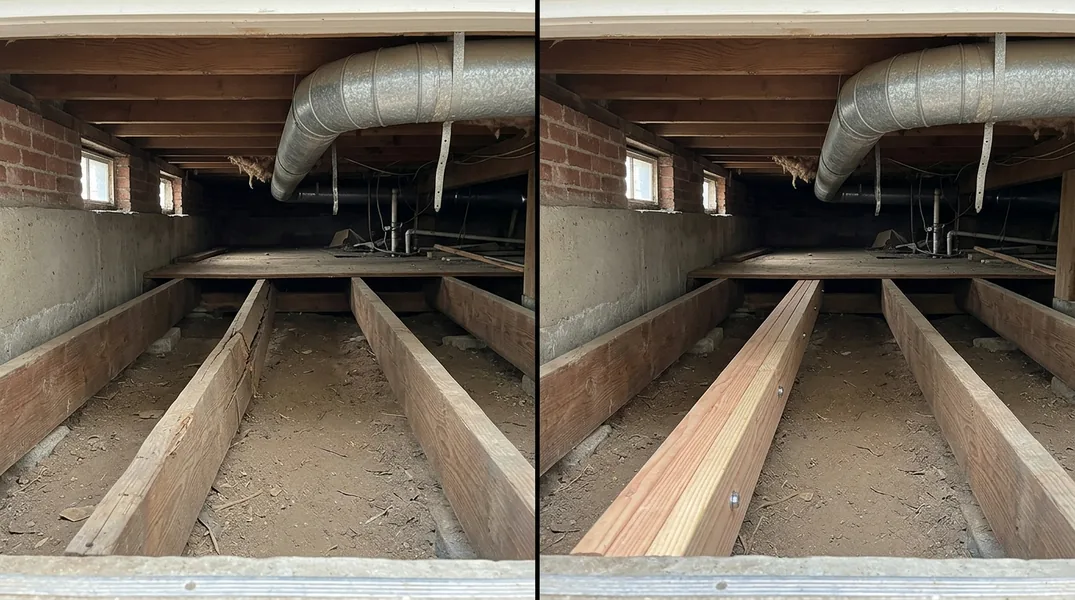
Why Is My Floor Sagging? Common Causes in Older Denver Homes
If you own an older home in Denver, a sagging floor is more than just an aesthetic concern. It's a warning sign that something structural is wrong beneath the surface. The most common culprit is damage to the floor joists, the wooden beams that form the skeleton of your floor system. When these joists weaken, your floor loses its support and begins to sag, dip, or feel bouncy underfoot.
The primary causes of floor joist deterioration fall into a few categories. Wood Rot & Dry Rot Repair is often the leading reason. Moisture intrusion from plumbing leaks, foundation cracks, poor drainage, or high humidity in crawl spaces allows fungi to colonize the wood. Dry rot, in particular, can spread rapidly and cause wood to become brittle and lose its load-bearing capacity. Another common cause is Termite Damage Repair needs. Termites tunnel through joists, hollowing them out from the inside, which severely compromises their structural integrity. Additionally, homes that have experienced water damage, foundation settlement, or inadequate support posts are prone to sagging floors.
How Floor Joist Repair Works: Sistering and Other Solutions
Once you've identified that your floor is sagging due to damaged joists, the repair approach depends on the extent of the damage and the underlying cause. For moderate damage where the joist still has some structural integrity, Floor Joist & Subfloor Repair specialists often use a technique called sistering floor joists. This process involves installing a new or reinforced wooden beam alongside the damaged joist and fastening them together with bolts and nails, creating a stronger combined unit. Sistering floor joists is cost-effective and minimally invasive compared to full joist replacement, making it a popular choice for homeowners.
However, if the damage is extensive, complete joist replacement may be necessary. This involves removing the compromised joist entirely and installing a new one in its place. In cases where multiple joists are damaged or the foundation itself has settled, a more comprehensive solution like Beam Replacement & Load-Bearing Wall Removal work might be required to restore proper support to the entire floor system. The right solution depends on a professional inspection of your specific situation. Addressing the root cause of the damage, whether that's moisture control, pest treatment, or foundation repair, is equally important to prevent the problem from recurring.
Sagging Floor Repair Cost in Denver: What to Budget
The cost of repairing a sagging floor in Denver varies widely depending on the severity of the damage, the number of joists affected, and the repair method chosen. Sistering a single floor joist typically costs between 800 and 1,500 dollars, while replacing an entire joist can run 1,200 to 2,500 dollars. If multiple joists need repair or if the underlying cause requires additional remediation, such as moisture control or pest treatment, costs can climb significantly. For comprehensive structural repairs involving beams or foundation work, homeowners should expect to invest 3,000 to 10,000 dollars or more.
Several factors influence final pricing. The accessibility of the damaged joists affects labor time. If your crawl space is tight or the joists are difficult to reach, costs increase. The type of wood damage also matters. Dry rot often requires more extensive removal of affected material than other types of damage. Additionally, if the root cause, such as foundation settling or chronic moisture, needs to be addressed, those remediation costs are separate from the joist repair itself. Denver Carpentry recommends getting a detailed free estimate from a qualified contractor who can assess your specific situation and provide accurate pricing.
Signs Your Floor Needs Professional Attention Now
Sagging floors don't develop overnight, but they do progress. Early detection can save you thousands in repair costs. One of the most obvious signs is visible sagging or a noticeable dip when you walk across a room. You might notice that doors no longer close properly, or windows have cracks radiating from the corners. A bouncy or spongy feeling underfoot when walking is another red flag, especially if it's localized to one area. Some homeowners report hearing creaking or popping sounds coming from under the floor, which indicates movement and stress on the wood structure.
Less obvious but equally important signs include moisture in your crawl space, musty odors, or visible mold growth. These conditions create the perfect environment for wood rot and termites to thrive. If you notice any of these warning signs in your home, don't wait. Structural damage compounds over time, and delaying repairs can turn a manageable problem into a major one. Contact Denver Carpentry at (720) 807-5448 for a professional evaluation. Our team can identify the cause of your sagging floor and recommend the most effective and cost-efficient repair solution for your home.
Prevention: How to Protect Your Joists and Avoid Future Sagging
The best approach to sagging floors is prevention. Moisture is the enemy of wood, so controlling humidity and water in your home is critical. Ensure your gutters and downspouts direct water away from your foundation. Fix plumbing leaks promptly, even small ones, as they can cause significant damage over time. Improve ventilation in crawl spaces and basements to reduce humidity levels. Installing a vapor barrier in crawl spaces can help manage moisture. During Denver's dry season, homes can experience lower humidity, but winter snow melt and spring rains can introduce moisture, so year-round vigilance is important.
Regular inspections are equally valuable. Schedule annual crawl space or basement inspections to catch early signs of moisture, pest activity, or wood damage before they become serious. Look for soft spots in wood, discoloration, or any signs of termite activity. If you're buying an older home in Denver, have a professional home inspection that specifically evaluates the structural integrity of floor joists. Addressing small issues early prevents them from becoming expensive repairs. If you suspect any damage to your floor system, reach out to Denver Carpentry for a professional inspection and guidance on protecting your home's structural health.
When to Call a Professional Floor Repair Contractor Near Me
While some homeowners are tempted to tackle floor repairs themselves, structural work requires professional expertise and proper equipment. Floor joist repair involves working in confined spaces, calculating load requirements, and ensuring repairs meet building codes. Mistakes in this work can compromise your home's safety and lead to costly problems down the road. A qualified contractor will not only repair the damaged joists but also identify and address the underlying cause of the damage, whether that's moisture, pests, or foundation issues.
Denver Carpentry specializes in floor joist repair and structural carpentry for homes throughout the Denver area. Our team has the experience to diagnose the root cause of your sagging floor, recommend the most appropriate repair method, and execute the work to code. Whether you need sistering floor joists, complete joist replacement, or more comprehensive structural work, we handle it with professionalism and attention to detail. If you're noticing signs of a sagging floor or have concerns about your home's structural integrity, contact us today at (720) 807-5448 or request a free estimate online. We're here to help protect your home and your family.
Looking for a professional carpentry contractor in Denver? Denver Carpentry responds fast for all your carpentry needs.
Get a Free QuoteOur services: Wood Rot & Dry Rot Repair · Termite Damage Repair · Floor Joist & Subfloor Repair