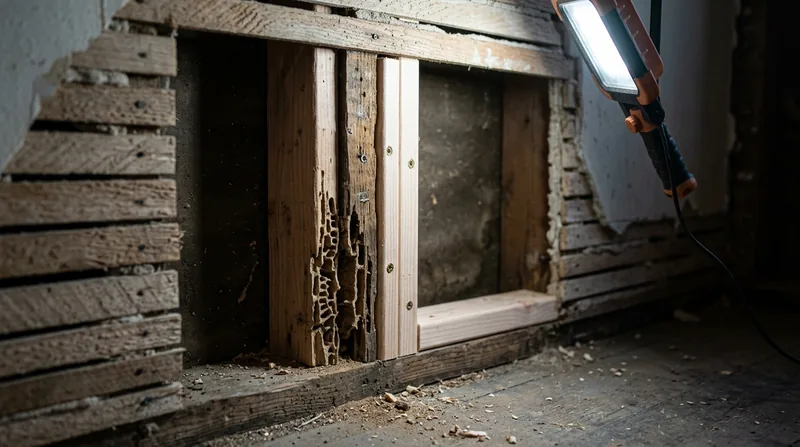




Termite Damage Repair in Denver is uncommon but critical when wood-boring insects are confirmed by a pest inspector. At one mile above sea level on the Front Range, Denver's high-altitude, semi-arid climate creates conditions where termites are essentially absent. Most residential wood damage here comes from hail impact, UV cracking, and the extreme freeze-thaw cycles that split exterior wood rather than rotting it. When termite damage does occur, we replace compromised studs, sill plates, trim, and subfloor sections, restoring full structural integrity and working from your pest inspection report. We don't treat or exterminate, we repair and replace the wood the insects damaged. For homeowners across Denver, Aurora, Lakewood, and the surrounding metro area, this means getting the damaged wood out and sound wood back in, fast and right.
Why Termite Damage Repair Matters in Denver (Even Though Termites Are Rare)
The Denver metro sits in one of America's driest climates, which is why termite infestations are rare here compared to coastal and humid regions. However, when a pest inspector does confirm wood-boring insects in a home, the damage is real and structural. Termites work inside the wood, hollowing out studs, sill plates, floor joists, and rim joists without obvious external signs until the damage is extensive. Left unaddressed, compromised framing can affect floor levelness, wall stability, and the integrity of load-bearing elements. Repairing the damaged wood quickly prevents further settlement and stops the pathway for additional insect activity once pest treatment is complete.
- We identify and remove all wood that shows active or past insect tunneling and structural compromise.
- We sister floor joists, replace rim joists and sill plates, and cut in new studs to restore load-bearing capacity.
- We match wood species and grain direction to maintain structural continuity and allow for proper fastening.
- We work from your pest inspector's report to confirm the scope and ensure no missed areas.
- We coordinate timing so repair happens after pest treatment, preventing recontamination of new wood.
Once the damaged wood is gone and new framing is installed, your home's structural integrity is fully restored.
Key info: Termite damage in Denver is typically found in older homes, particularly in Capitol Hill, Curtis Park, Five Points, and the brick Denver Squares built in the early 1900s. Historic rowhouses and Victorian mansions are more susceptible because their age and previous moisture exposure create conditions insects prefer. If you own a historic home in Denver and notice soft wood, visible tunneling, or have had a pest inspection flag termites, call us immediately at (720) 807-5448.
For more information on wood damage repair in general, see our Wood Rot and Dry Rot Repair page, which covers similar structural repair work for other failure modes common in Denver.
How We Handle Termite Damage Repair in Denver: Step-by-Step
Our process begins with a careful inspection of the pest report and the affected wood. We map out which studs, joists, sill plates, and trim sections show damage, then assess whether repair or replacement is the right call. Damaged wood that is structural or load-bearing gets removed and replaced with new, pressure-treated or kiln-dried lumber matched to the original species whenever possible. We use sistering techniques on floor joists where the existing joist has partial damage and sufficient wood remains to support a sister beam bolted alongside it. Trim, fascia, and non-structural elements are replaced in kind. All work follows the framing pattern and fastening standards required by the International Residential Code, and permits are obtained where structural work crosses local thresholds.
- We obtain your pest inspection report and confirm the scope of damage with a site visit and visual assessment.
- We remove all compromised wood, including studs, joists, sill plates, rim joists, and affected trim sections.
- We install new framing lumber, properly fastened and braced, restoring the original load path and structural continuity.
- We use sistering or joist replacement depending on the extent of damage and the remaining sound wood.
- We coordinate with your pest control contractor to ensure treatment is complete before new wood is installed.
- We finish the repair with any required drywall, trim, or exterior cladding to match the existing home.
The entire process ensures your home is structurally sound and ready for occupancy once the repair is complete.
Local example: A homeowner in Highlands discovered termite damage in the rim joist and sill plate of a 1920s bungalow during a pre-sale inspection. The damage ran about 8 linear feet along one wall. We removed the damaged sill and rim joist, sistered the floor joists where they showed minor tunneling, and installed a new pressure-treated rim and sill plate bolted to the foundation. The job took 3 days and cost under $3,500. The home passed reinspection and sold without further structural concerns.
See our Floor Joist and Subfloor Repair page for more detail on joist replacement and sistering techniques.
Termite Damage Repair Methods
| Approach | Description | Best for |
|---|---|---|
| Full joist replacement | Remove the entire floor joist and install a new one, fastened to rim joist and beam with bolts or joist hangers. | Extensive damage along the full length of the joist or at critical bearing points. |
| Sistering | Install a new joist or beam alongside the damaged one, bolted together at 16-inch intervals, sharing the load. | Moderate damage where the existing joist retains sufficient wood and bearing capacity to share load with a sister. |
| Sill plate and rim joist replacement | Remove damaged sill and rim, install pressure-treated lumber bolted to the foundation and rim board, restoring the load path. | Termite damage concentrated at the foundation or perimeter framing, common in older Denver homes. |
| Trim and fascia replacement | Remove damaged exterior trim, fascia, or soffit and install new lumber or composite trim matched to the original profile. | Non-structural wood damage in trim, siding, or exterior details where appearance and weather resistance matter most. |
| Stud replacement in walls | Remove damaged studs and install new ones, properly braced and fastened to top and bottom plates. | Termite damage in wall framing where studs show tunneling or structural loss but the wall is not load-bearing. |
Termite Damage Repair Cost in Denver: What to Expect
Termite damage repair in Denver typically starts at $1,200 for minor damage confined to trim or small sections of sill plate. Most residential jobs range from $1,500 to $4,500, depending on the linear footage of damaged framing, the number of joists that need sistering or replacement, and whether the damage extends to load-bearing elements. A full rim joist replacement on a modest home runs $2,500 to $3,500. If multiple joists need replacement or if structural work requires a permit and engineering review, costs can exceed $5,000. The main factors that move pricing are the extent of tunneling, the accessibility of the damaged wood, whether sistering or full replacement is appropriate, and the need for permits on load-bearing repairs.
We recommend getting 2 to 3 estimates from local carpenters so you can compare scope, materials, and timeline. Many homeowners find that having a detailed pest inspection report in hand before meeting with a carpenter helps clarify the repair scope and reduces surprises. For a free estimate and a specific number for your job, call us at (720) 807-5448 or visit our pricing page for more detail on how we structure estimates.
Termite Damage Repair Near Me: What Denver Homeowners Should Know When Hiring a Contractor
Finding the right carpenter for termite damage repair means looking for someone who understands structural framing, can read a pest inspection report, and knows which repairs require permits. In Denver, structural work on load-bearing walls, floor systems, and beam replacement commonly triggers permit requirements, and your local building department sets the threshold. Ask any contractor whether the job will need a permit and confirm they are willing to pull one if required. Check that they are fully insured and ask for proof of general liability and workers compensation coverage. Get references from past clients and ask specifically about jobs where they repaired termite or insect damage, not just rot repair. If your home is historic or in a protected district like Capitol Hill or Curtis Park, confirm the contractor is familiar with historic preservation standards and any HOA or neighborhood guidelines that apply to exterior work.
Many homeowners also ask whether their insurance will cover the repair. We can help document the damage for your insurance claim, but whether the claim is approved depends on your policy, the cause of the damage, and your carrier's assessment. Never assume a deductible will be waived or that the full cost will be covered. Once you have a repair estimate and a clear scope, your insurance company can give you a definitive answer on coverage.
For a free, no-obligation estimate and to discuss your specific situation, contact us online or call (720) 807-5448. We respond within 24 hours and are happy to answer questions about permits, timeline, and what to expect during the repair.
Termite Damage Repair in Denver: Pricing Guide
| Service | Price | Details |
|---|---|---|
| Minor trim and fascia damage | Starting at $1,200 | Localized damage in exterior trim or soffit, less than 10 linear feet, no structural framing involved |
| Sill plate or rim joist repair | Starting at $2,500 | Partial sill or rim joist replacement, typically 4 to 8 linear feet, moderate damage, access is reasonable |
| Floor joist sistering or replacement | Starting at $3,000 | One to two joists, sistered or replaced, includes fastening, bracing, and coordination with pest control timing |
| Multi-joist or load-bearing wall repair | On estimate | Extensive damage across multiple joists, studs, or load-bearing elements; requires site visit, possibly structural engineer input |
| Permits and engineering | Passed to homeowner | Structural work typically requires local building permit; we obtain and manage, cost varies by scope and local jurisdiction |
| Free estimate | No obligation | Response within 24 hours, (720) 807-5448, includes site visit, damage assessment, and written scope and price |
Indicative pricing, the exact cost depends on square footage, finish, and site access. Free personalized estimate within 24h at (720) 807-5448.


