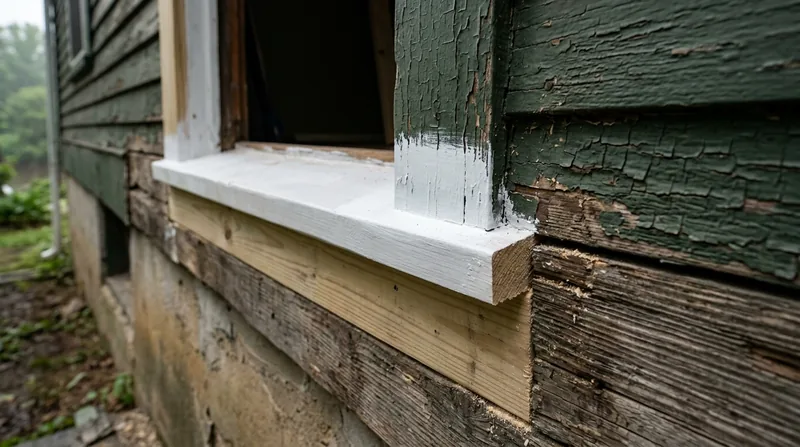




Denver's high-altitude, semi-arid climate creates a unique environment for wood damage. Intense UV radiation, extreme dryness, and sharp freeze-thaw cycles crack and check exterior wood far more often than moisture causes traditional rot. Yet in shaded spots, under eaves, and where snowmelt sits against sill plates, real decay does take hold. Wood rot and dry rot repair in Denver means identifying where wood has genuinely failed, cutting out the decayed material, treating the surrounding framing, and rebuilding with rot-resistant lumber. This is a permanent structural repair, not a cosmetic patch. Denver Carpentry has been performing this work since 2016, treating everything from Victorian mansions in Capitol Hill to craftsman bungalows in Highland and Sloan's Lake to the brick Denver Squares that define the city's residential character. We explain what we find, propose repair where the wood justifies it, and replace only what cannot be salvaged.
Why Wood Rot Repair Matters in Denver: Climate and Building Stock
Denver sits at exactly one mile above sea level on the Front Range, where the climate is semi-arid with intense solar radiation and very low humidity. This extreme dryness splits and checks exterior wood constantly, especially south and west-facing trim, fascia, and siding. Hail is another major factor: Denver lies in Hail Alley, experiencing more frequent and costly hailstorms than almost any major metro area in the country. Impact damage to fascia, trim, and deck framing opens the wood to moisture infiltration. The city's building stock ranges from historic brick Victorians and early-1900s Denver Squares to converted warehouses in LoDo and newer stucco-and-fiber-cement subdivisions. Each type presents different wood-damage patterns and repair priorities.
- We identify sun-checked and UV-damaged wood that has begun to fail structurally, not cosmetically.
- We remove decayed sill plates, rim joists, and floor joists that support the entire structure.
- We treat surrounding framing with preservative to stop decay from spreading to sound wood.
- We rebuild with pressure-treated or naturally rot-resistant lumber, creating a repair that lasts decades.
- We document damage for insurance claims when hail or weather has triggered the failure.
In Denver's dry climate, the real risk is not widespread rot but localized failure at moisture-trapping points. Catching and repairing these spots before they undermine floor joists, beam bearing points, or structural framing prevents far costlier work down the road.
Key info: Denver's hail damage often appears as small impact dents in wood, but water enters through the crack. A single season of snowmelt or condensation in a hail-damaged fascia or deck board can begin rot that weakens the structure. Early repair stops this progression.
For more detail on related structural issues, see our page on floor joist and subfloor repair in Denver, which often accompanies wood rot work in older homes.
How We Repair Wood Rot and Dry Rot in Denver
Our process starts with a careful site inspection to determine whether wood is cosmetically damaged, partially decayed, or structurally failed. We use a combination of visual assessment and probe testing to map the extent of decay. Once we understand the scope, we remove the damaged material, treat the surrounding framing, and rebuild with appropriate lumber. For structural members like floor joists or sill plates, we may sister new framing alongside the existing member or replace it entirely, depending on the damage and load-bearing role.
- We inspect the site and probe suspected areas to identify the full extent of decay and sound wood.
- We remove all decayed wood, creating a clean interface between old and new material.
- We treat surrounding framing with wood preservative to prevent decay from spreading.
- We cut and fit new pressure-treated lumber or naturally rot-resistant species to match the original dimensions.
- We secure new framing with fasteners appropriate to the structural role and local building code.
- We finish exterior repairs with caulk or siding to match the home and shed water properly.
The entire approach rests on honest diagnosis: we do not assume that all soft wood must be replaced wholesale. If the decay is localized and the structural member can be reinforced by sistering, we propose that. If replacement is the only sound option, we say so clearly.
Example: A Capitol Hill Victorian with a rotted sill plate under a bay window. We remove the decayed sill, treat the rim joist and band board above it, and install a new pressure-treated sill bolted to the rim joist. The repair restores structural continuity and prevents water from entering the rim joist cavity. Total cost typically ranges from $1,200 to $2,500 depending on the length of sill and the condition of the rim joist.
Learn more about our structural carpentry approach on our framing and structural carpentry page.
| Repair Approach | Description | Best For |
|---|---|---|
| Localized removal and rebuild | Cut out decayed section, treat surrounding wood, install new pressure-treated lumber cut to original profile. | Fascia, trim, sill plates, and small sections of rim joist with decay limited to one edge or end. |
| Sistering (reinforcement) | Install a new beam or joist alongside the existing member, bolted or fastened to share the load. | Floor joists, rim joists, and header beams where the existing member is still partially sound but compromised. |
| Full member replacement | Remove the entire damaged member and install new lumber of the same dimensions and species or engineered equivalent. | Structural members with decay throughout the cross section, or where sistering is not structurally practical. |
| Preventive treatment | Apply wood preservative to sound framing adjacent to decay to arrest fungal growth and prevent spread. | All repairs, as a standard step to protect the existing wood from continuing moisture and decay risk. |
Wood Rot and Dry Rot Repair Cost in Denver: What to Expect
Wood rot repair costs in Denver typically start at $650 for a small localized repair (a short section of fascia, a single damaged trim board, or a small sill plate section). Most residential jobs fall between $1,200 and $3,500, depending on the extent of decay, the structural role of the member, and access. A full floor joist or rim joist replacement can run $3,500 to $8,000 or more. The primary factors that move the cost are the linear feet of damage, whether the member is structural or cosmetic, and how easily we can access the work.
Hail-triggered damage or decay in hard-to-reach areas like under a deck or inside a closed soffit adds labor and scaffolding cost. Older homes with non-standard framing sometimes require custom cuts or temporary bracing, which increases the estimate. We always provide a detailed written estimate before starting work, and we respond to estimate requests within 24 hours at (720) 807-5448.
For a full breakdown of our pricing structure and examples of common jobs, visit our pricing page. We also help document damage for insurance claims, which can recover a portion of the repair cost if the failure was triggered by a covered event like hail impact.
Wood Rot and Dry Rot Repair Near Me: What to Look for When Hiring a Carpenter in Denver
Finding the right carpenter for wood rot repair means checking a few concrete things: that the contractor is fully insured, that they provide multiple references from similar projects, and that they explain the repair method and why they chose it. Ask whether the estimate includes a site visit (ours does, always), and request references from jobs in your neighborhood or with similar home types. For structural work like floor joist replacement or load-bearing sill plate repair, confirm that the contractor understands local permit requirements and can coordinate with the building department if needed. If your home is in a historic district like Capitol Hill or Cheesman Park, check whether your city or HOA requires approval for exterior repairs.
- Verify that the contractor is fully insured and can provide a certificate of insurance on request.
- Request at least two references from similar wood rot or structural repair jobs completed in the past two years.
- Understand whether the estimate includes a site visit and written scope of work before any commitment.
- Ask whether the repair will require a building permit and who coordinates with the city or county.
- Confirm that the contractor sources pressure-treated or rot-resistant lumber appropriate to the application.
- Get the estimate in writing with a clear timeline and a final price, not a range.
Denver Carpentry has been doing this work since 2016. We visit every site, explain what we find, and provide a written estimate within 24 hours. If you have questions about your specific situation or would like a free estimate, contact us here or call (720) 807-5448.
Wood Rot & Dry Rot Repair in Denver: Pricing Guide
| Service | Price | Details |
|---|---|---|
| Small localized repair | Starting at $650 | Fascia board, short trim section, or small sill plate patch, removal and rebuild included. |
| Medium repair | Starting at $1,500 | Longer fascia, rim joist section, or sill plate, includes treatment and new pressure-treated lumber. |
| Structural member replacement | Starting at $3,500 | Floor joist, beam, or full sill plate replacement; sistering or full member swap with fastening and code compliance. |
| Large or complex job | On estimate | Multiple members, difficult access, or historic home requirements require site visit and detailed proposal. |
| Travel and estimate | Included | No mileage charge or call-out fee within Denver and surrounding metro areas, free written estimate within 24 hours. |
Indicative pricing, the exact cost depends on square footage, finish, and site access. Free personalized estimate within 24h at (720) 807-5448.


