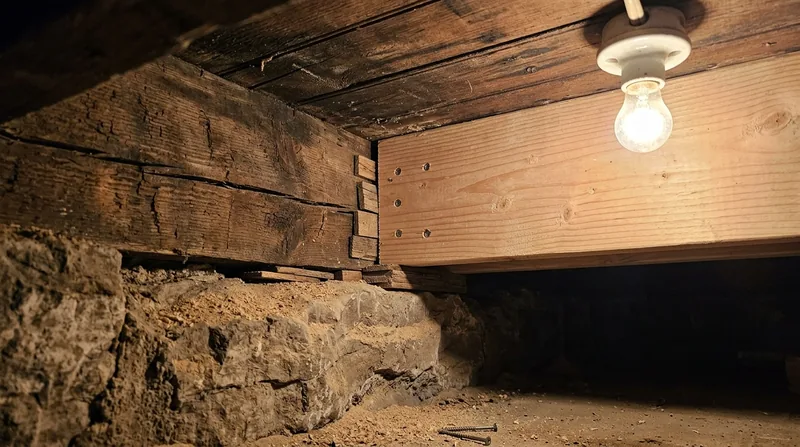




Denver's signature early-1900s brick foursquares, Victorian mansions, and craftsman bungalows sit exactly one mile above sea level on the Front Range, where the climate is high-altitude semi-arid with intense UV, extreme dryness, and sharp freeze-thaw cycles. These conditions, combined with Denver's position in Hail Alley, create a particular set of wood-damage challenges. Sagging, bouncy, or soft floors in Denver homes usually trace to damaged floor joists or subfloor, sometimes compounded by foundation movement during seasonal moisture and temperature swings. Floor joist and subfloor repair in Denver restores structural integrity, eliminates bounce, and prevents further deterioration before finishes go down. We sister or replace compromised joists, rebuild subfloor sections, and level floors so they feel solid underfoot again. If you're noticing movement or soft spots in your floors, call (720) 807-5448 for a free estimate, or learn more about our wood rot and dry rot repair services.
Why Floor Joist and Subfloor Repair Matters in Denver's Freeze-Thaw Climate
Denver's dry, sharp freeze-thaw cycle is relentless on wood framing. Winter moisture that enters through poor drainage, roof leaks, or plumbing failures gets trapped in joists and rim boards; when temperatures plunge below freezing, water expands and stresses the wood fibers. When it thaws, the wood shrinks, creating checks and cracks that invite more moisture penetration. Over seasons, this cycle weakens joists and causes subfloor sections to sag, bounce, or rot. Additionally, Denver's intense hail exposure can damage fascia, soffit, and gutters, allowing water to cascade into rim boards and joist bays. Addressing these problems early prevents expensive structural failure and keeps your floors level and safe.
- We identify the source of moisture intrusion and repair or replace the compromised joists before the problem spreads to adjacent framing.
- We sister sound joists with new pressure-treated lumber, fastened to code, to restore load-carrying capacity without full replacement when the existing wood is salvageable.
- We rebuild subfloor sections using exterior-grade plywood or tongue-and-groove decking, leveling the floor as we work.
- We document the damage and repair work to support insurance claims if the failure is weather-related or the result of a covered loss.
Early intervention saves money and prevents floors from becoming a safety hazard or a source of further water damage to the structure below.
Key info: Denver's dry climate means wood rot develops more slowly here than in coastal or humid regions, but freeze-thaw damage and hail-driven water intrusion still compromise joists and subfloor over time. A soft or bouncy floor is often the first sign that moisture has reached the framing.
For more information on water damage and wood deterioration, refer to the City and County of Denver Building Department guidelines on structural repairs and permitting requirements.
How We Repair Floor Joists and Subfloor in Denver Homes
Our process starts with a thorough inspection to identify which joists and subfloor sections are compromised and what caused the damage. We use moisture meters, visual assessment, and hand-probe testing to determine whether wood is salvageable or needs full replacement. Once we understand the scope, we plan the repair sequence to minimize disruption and ensure the floor is level and stable when we finish. We work from underneath when possible, but we also remove flooring and finishes if necessary to access the damage and do the work right.
- We inspect the entire joist bay, rim board, and sill plate to confirm the extent of damage and identify the moisture source.
- We address any active water intrusion, such as roof leaks, gutter failures, or plumbing issues, before we begin structural repairs.
- We sistered compromised joists with new lumber, fastened with galvanized bolts and nails every 16 inches, creating a composite member that shares the load.
- We remove and replace severely damaged joists, preserving the original rim board and sill plate if they are sound.
- We rebuild subfloor sections with exterior-grade plywood, screwed and glued to the joists for maximum stiffness.
- We level the floor using shims, leveling jacks, or careful blocking to ensure a flat, solid surface for finishes.
- We restore any trim, baseboard, or finished flooring that was removed during the repair.
The result is a floor that feels solid, moves minimally under foot, and is protected against future moisture damage. For related structural work, see our beam replacement and load-bearing wall removal services.
Local example: A 1920s foursquare in Cheesman Park with a soft master bedroom floor and visible rot in the rim board along the exterior wall. We sistered the three most compromised joists, replaced a 4-foot section of rotted rim board, and sealed the rim board with exterior caulk and flashing to stop water entry. The floor is now level and solid, and the homeowner has a clear maintenance plan to keep gutters and roof sealed against future leaks.
Floor Joist and Subfloor Repair Methods and Techniques
| Approach | Description | Best for |
|---|---|---|
| Sistering | Fastening new pressure-treated lumber alongside a compromised joist, creating a composite beam that shares the structural load with the original wood. | Joists with localized rot or moisture damage where the bulk of the wood is still sound and can support the added fastening. |
| Full Joist Replacement | Removing a severely damaged joist entirely and installing new pressure-treated lumber on the same bearing points, sized to match the original depth and spacing. | Joists with advanced rot, significant moisture damage, or structural failure that sistering cannot safely address. |
| Rim Board and Sill Plate Repair | Replacing rotted or damaged sections of the rim board or sill plate, which form the perimeter of the joist bay and are common failure points in Denver homes. | Water intrusion along exterior walls, hail damage to fascia and gutters, or freeze-thaw damage at the foundation line. |
| Subfloor Patching and Leveling | Removing damaged subfloor planks or plywood, installing new exterior-grade material, and shimming or leveling the surface to eliminate bounce and soft spots. | Localized rot or moisture damage in subfloor sections; soft or bouncy floors that do not require full joist replacement. |
| Moisture Control and Sealing | Installing or repairing gutters, downspouts, and flashing; sealing rim boards and sill plates with caulk and exterior sealant to prevent future water intrusion. | All joist and subfloor repairs, to prevent recurrence of moisture damage in Denver's freeze-thaw climate. |
Each approach is chosen based on the extent of damage, the structural requirements of the floor system, and the root cause of the failure. We always prioritize repair over replacement when the wood is sound enough to justify it, and we explain the reasoning behind our recommendation so you understand what you are paying for.
Floor Joist and Subfloor Repair Cost in Denver: What to Expect
Floor joist and subfloor repairs in Denver typically start at $1,800 for localized damage to one or two joists and a small subfloor patch in an accessible basement or crawlspace. Costs rise with the number of joists involved, the extent of subfloor damage, the need for rim board or sill plate replacement, and the complexity of access. A full-floor repair in an older home with multiple compromised joists and widespread rot can easily reach $5,000 to $8,000 or more, depending on the square footage and the structural scope. Removing and replacing finished flooring, trim, and baseboard adds to the final bill.
Several factors affect the total cost. The number and length of joists that need sistering or replacement directly impacts labor and material. The accessibility of the damage matters greatly: work in a finished basement requires careful removal and restoration of drywall, flooring, and finishes, whereas work in an open crawlspace is faster and cheaper. The source of the moisture also influences cost: if a roof leak or gutter failure caused the damage, addressing that source may be a separate job. Finally, the structural scope of the repair determines whether permits or engineer input is needed, which can add time and cost.
We recommend getting 2 or 3 estimates from local contractors so you can compare approach, timeline, and price. Our estimate is free and comes with a detailed walkthrough of what we found and why we recommend the repair we do. Call (720) 807-5448 to schedule, or visit our pricing page for a full breakdown of our rates and service costs.
Floor Joist and Subfloor Repair Near Me: What Denver Homeowners Should Know When Hiring a Carpenter
When you're looking for a carpenter to repair your floor joists and subfloor in Denver, Aurora, Lakewood, or the surrounding area, focus on experience with structural carpentry, a clear understanding of your home's age and construction type, and honest communication about what can be repaired versus what needs replacement. Ask whether the contractor has experience with Denver's climate and the specific failure modes common to your neighborhood. Check that they are fully insured and can provide proof of coverage. Ask for references from recent floor joist or subfloor jobs, and follow up with at least two of them.
Understand that some repairs may require a permit, especially if the work involves altering load-bearing framing or removing and replacing more than a few joists. Your local building department (in Denver, the City and County of Denver Building Department) sets the rules, and thresholds vary by jurisdiction. A reputable contractor will tell you upfront whether a permit is likely and will help you navigate the process. If you live in an HOA community, check your covenants to see if there are any restrictions on exterior work or structural modifications.
Ask for a detailed written estimate that breaks down labor, materials, and any additional costs. Clarify the timeline: how long will the work take, and what is the contractor's schedule for starting? Get clarity on whether finishes like flooring, trim, and baseboard are included in the estimate or quoted separately. Finally, confirm that the contractor will help document the damage and repair work for any insurance claim you may file. For a free estimate and to discuss your specific situation, contact Denver Carpentry today.
Floor Joist & Subfloor Repair in Denver: Pricing Guide
| Service | Price | Details |
|---|---|---|
| Single Joist Sistering | Starting at $1,800 | One joist reinforced with new pressure-treated lumber, fastened to code, including subfloor patch in accessible crawlspace |
| Multiple Joists or Rim Board Repair | Starting at $3,500 | Two to four joists sistered or replaced, plus rim board section repair and subfloor leveling in average-access basement or crawlspace |
| Full Floor Section Repair | Starting at $5,500 | Extensive joist replacement, sill plate repair, and subfloor rebuild across 200 to 300 square feet, including finished flooring removal and restoration |
| Structural Assessment and Engineering Consultation | On estimate | Complex or load-bearing repairs often require licensed structural engineer review and permit; quote provided after initial site visit |
| Travel and Estimate | Included | No separate mileage or call-out fee within Denver and surrounding service areas; free estimate within 24 hours of contact |
Indicative pricing, the exact cost depends on square footage, finish, and site access. Free personalized estimate within 24h at (720) 807-5448.


