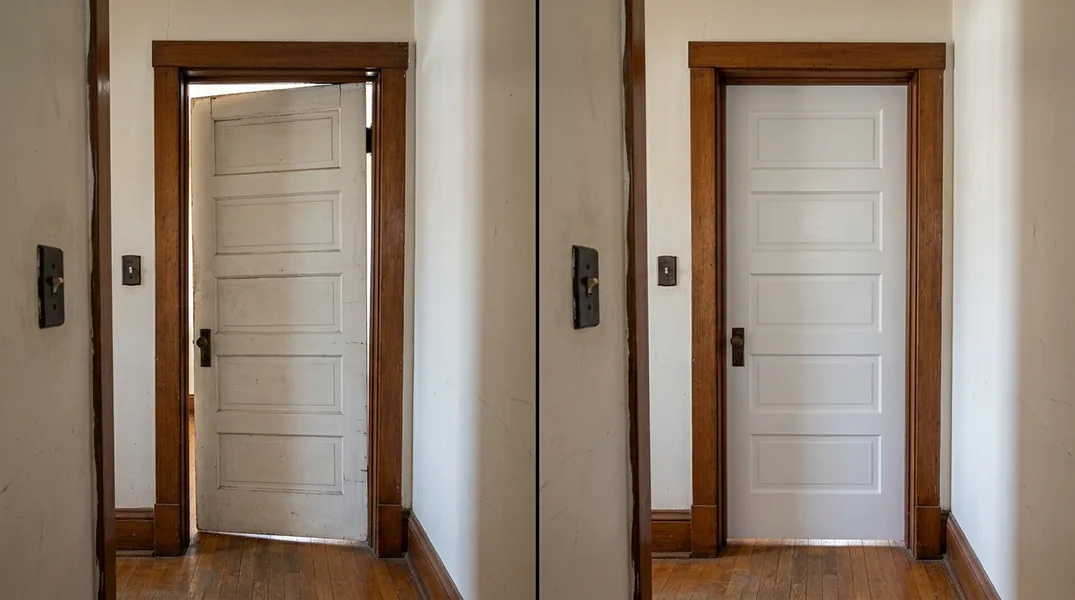
Understanding Hail Damage vs. Sun Damage in Denver Wood
Denver's high-altitude climate and intense UV exposure create unique challenges for wood siding, trim, and structural elements. Hail damage and sun-cracking are two of the most common issues we encounter, yet homeowners often confuse them or underestimate their severity.
Hail damage typically appears as dents, gouges, or splits in wood surfaces. When hail strikes, it compresses the wood fibers, creating visible depressions that may or may not penetrate deeply. The real danger isn't always what you see on the surface. If the impact cracks the wood or compromises its protective finish, moisture can infiltrate, leading to rot over time. Sun-cracking, by contrast, develops gradually as UV rays break down the wood's lignin (the natural binder in wood fibers). You'll notice long, parallel cracks running with the grain, typically on south and west-facing sides of homes. Unlike hail damage, sun cracks don't happen overnight, but they're equally problematic because they create pathways for water infiltration and pest entry.
When to Repair Rotted Wood Without Replacing It
The good news: not every damaged board requires full replacement. If you catch damage early, Wood Rot & Dry Rot Repair is often possible without tearing out entire sections of siding or trim. Repair without replacement works best when damage is limited to the surface layer, the wood is still structurally sound underneath, and the affected area is less than 30 percent of the board's width.
For hail dents that haven't cracked through, we can often sand, fill, and refinish the area. For shallow sun cracks, epoxy injection and careful sanding followed by protective staining can extend the wood's life significantly. The key is acting quickly. Wood exposed through cracks or gouges begins absorbing moisture within days, and decay accelerates from there. If you notice fresh hail damage or new cracking on your Lakewood or Arvada home, contact us for a free inspection before the problem spreads.
Signs It's Time to Replace Rotted Wood Siding
Some damage is beyond repair, and trying to patch it is like putting a bandage on a broken leg. Denver homeowners should replace rotted wood siding when the decay has penetrated more than a quarter-inch deep, when soft spots indicate active rot, or when cracks are wide enough to insert a coin. If the board has lost structural integrity (you can push your thumb into the wood, or it flexes abnormally), replacement is the only safe option.
Additionally, if damage affects more than 40 percent of a board's width, repair becomes economically and structurally unsound. Rot that has spread to multiple adjacent boards or has reached the underlying framing also demands replacement of the affected sections. Attempting a temporary fix in these scenarios often leads to hidden decay that worsens over months, eventually requiring more extensive (and expensive) repairs involving Floor Joist & Subfloor Repair or structural reinforcement.
Wood Repair Cost in Denver: What to Budget
Understanding pricing helps homeowners make informed decisions. Repair costs are typically lower than replacement, but they vary based on damage extent, wood type, and accessibility. A localized repair (filling and refinishing a hail dent or shallow crack) might run between $150 and $400 per area. If the damage requires epoxy injection or more involved patching, expect $400 to $800 per repair zone.
Replacing a single board of exterior siding generally costs between $300 and $600, depending on the board's size, wood species, and labor complexity. If multiple boards need replacement, costs scale accordingly. Structural repairs involving Beam Replacement & Load-Bearing Wall Removal or extensive rot remediation can reach several thousand dollars. The most cost-effective approach is prevention and early intervention. Addressing a small crack before it becomes a rotted board saves hundreds of dollars. We recommend getting a free estimate to understand your specific situation and options.
Hail-Damaged Wood Repair: A Step-by-Step Overview
When hail strikes, our repair process begins with a thorough assessment. We examine the damage under good lighting and use moisture meters to check whether water has already infiltrated the wood. For surface dents without cracks, we sand the area smooth and apply wood filler matched to the original wood species. Once the filler cures, we sand again and apply matching stain and protective sealant. This approach restores the wood's appearance and protects it from future moisture damage.
If hail has cracked the wood but the crack is shallow and doesn't extend through the board, we may inject epoxy into the crack to stabilize the fibers and prevent moisture intrusion. Deeper cracks that compromise structural integrity require board replacement. The timeline for hail damage repair is usually quick. Surface repairs can often be completed in a single visit, while replacement work may take two to three days depending on the number of boards and site conditions. Prompt action is critical because even hairline cracks allow moisture penetration, and Denver's dry climate followed by spring snowmelt creates ideal conditions for rapid wood decay.
Prevention: Protecting Your Wood from Future Damage
The best repair is the one you never need. Protecting wood from sun damage and hail impact requires a multi-layered approach. High-quality exterior stain or sealant with UV blockers should be reapplied every two to three years, especially on south and west-facing surfaces. This barrier prevents sun cracks from forming and helps wood shed water rather than absorb it. For homes in hail-prone areas, consider impact-resistant siding materials such as fiber cement or metal, which offer superior durability compared to traditional wood.
Regular inspections catch problems early. Walk around your home twice yearly, looking for new cracks, soft spots, discoloration, or areas where the finish is peeling. After severe weather events, inspect your siding and trim promptly. If you spot fresh damage, call Denver Carpentry at (720) 807-5448 for a quick assessment. Early detection often means the difference between a simple repair and a costly replacement. Proper gutter maintenance also plays a role. Clean gutters direct water away from siding, reducing moisture exposure and extending wood life. Trim tree branches away from your roof and siding to improve air circulation and reduce moisture retention.
Looking for a professional carpentry contractor in Denver? Denver Carpentry responds fast for all your carpentry needs.
Get a Free QuoteOur services: Wood Rot & Dry Rot Repair · Termite Damage Repair · Floor Joist & Subfloor Repair